
24/7 Emergency Line Open
Water softener and filtration
Hard Water, Spotted Glass and Scale: Softeners and Filters in Cheltenham
White crust on faucets, spotted glasses, dry skin after a shower and a water heater that scales up: these are the everyday signs of hard water. A softener removes the minerals that cause them, and a filter handles taste, odor and sediment.
The plumber tests the water, recommends a softener, a filter or both, installs the equipment and services it when it stops doing its job.
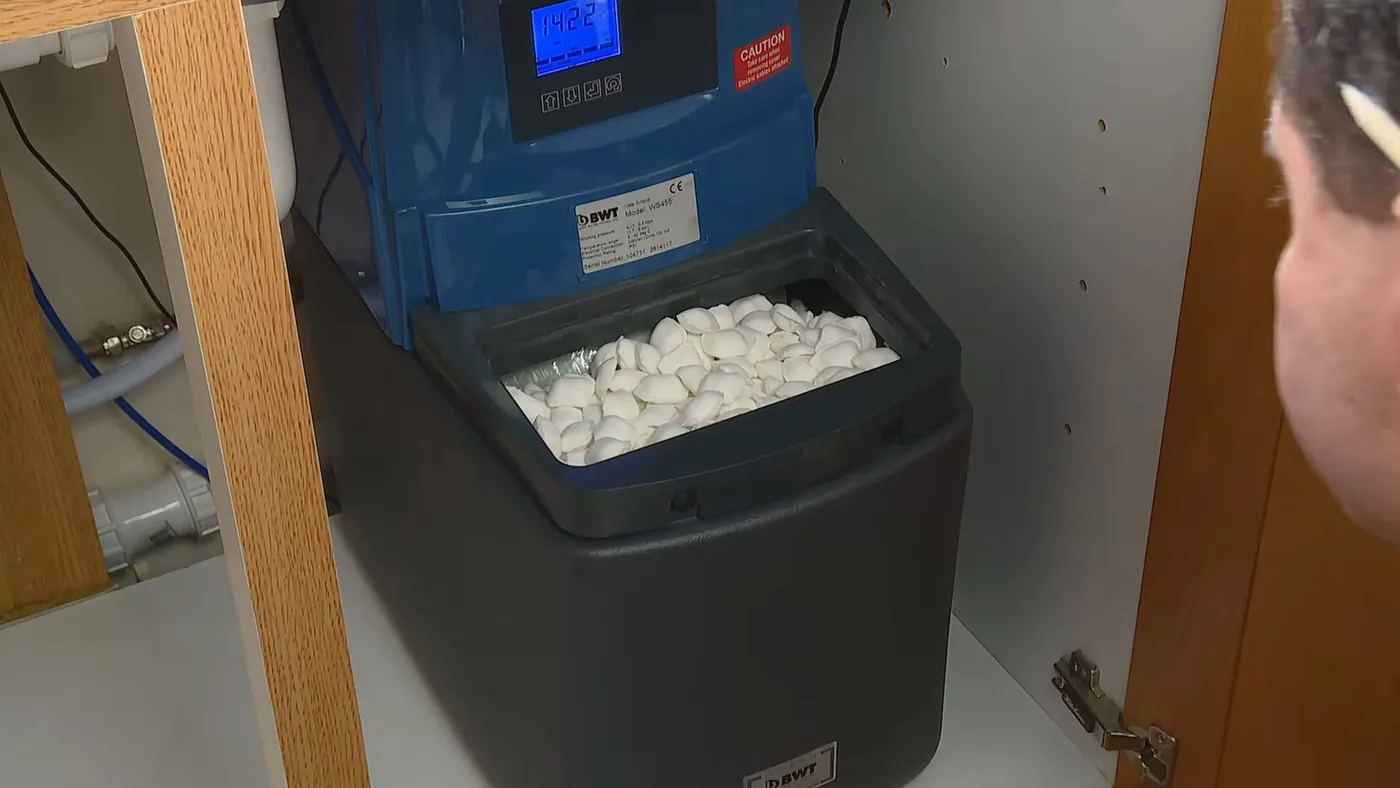
- Licensed and insured plumbers
- Same-day service when available
- 24/7 emergency dispatch
Hard water signs and how to test yours
Hard water carries dissolved calcium and magnesium. You see it as chalky scale on fixtures and showerheads, cloudy glassware, soap that will not lather and heating elements that crust over. Inside the pipes and the water heater the same minerals build a layer that cuts flow and wastes energy.
What the local numbers say
Public hardness data places Cheltenham Village near 8.9 grains per gallon, which falls in the hard category. A softener should be sized to your actual figure, so start with a test strip, a lab kit or the utility report, then choose equipment from that reading.
Source: state hardness comparison, read November 2026.
- Check the annual water quality report from your utility for a hardness value.
- Use a hardness test strip or a lab kit at the kitchen tap, taking the sample from a cold line.
- Note household size and the number of bathrooms, since both set the softener capacity.
- Share the result with the plumber when you call.
Water softeners: how they work and what size fits
A softener passes water through a bed of resin beads that trap calcium and magnesium and release sodium or potassium in exchange. When the beads fill, the unit regenerates by flushing them with brine from a salt tank. Capacity is rated in grains, and the right size depends on hardness, daily water use and how many people live in the house.
| Household | Typical use | Sizing question |
|---|---|---|
| One to two people | Low daily water use | Smaller capacity, longer between regenerations |
| Family of four | Moderate use, several showers | Mid-range capacity at the measured hardness |
| Large household | High use, many fixtures | Larger unit or a twin-tank model |
| Water heater scaling quickly | Very hard water | Size up and check the regeneration settings |
Conditioners that use no salt change how minerals stick to surfaces but do not remove them, so they reduce scale without softening the water. Ask the plumber what each option does and does not do for the problem you have.
Softener installation
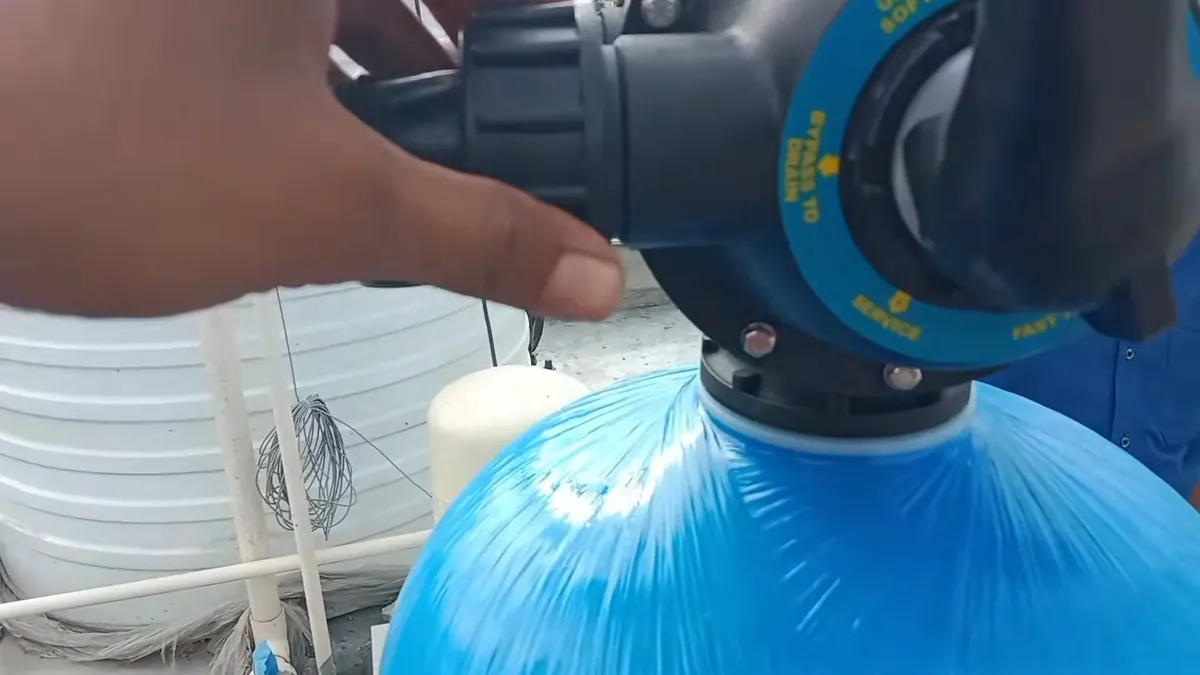
A softener goes on the main water line after the shutoff and before the water heater, with a bypass so the house keeps water during service. The plumber adds a drain connection for the regeneration cycle, an overflow line for the brine tank and a nearby electrical outlet for the control head. Outdoor spigots can be left on untreated water, since the minerals do no harm to a garden hose. The plumber also checks that the water heater and main shutoff stay reachable after the unit is in.
Placement matters. The unit needs a dry floor, room to refill the salt and a drain within reach. Before the visit, find the main shutoff and a spot near an outlet, and tell the plumber if you want a separate cold tap kept hard for drinking, as some households prefer.
Scale on every faucet?
Call dispatch with your hardness reading, if you have one, and the number of people in the house. The plumber can recommend a size and plan the installation.
Softener repair and service
A softener that stops softening has usually run out of salt, bridged the salt into a hard crust, clogged its injector or lost its settings after a power cut. Salt bridging leaves a gap under a hard crust, so the brine tank looks full while no brine forms. Break the crust with a broom handle and the unit works again.
Resin beads wear out after years of service, valves and seals leak, and control heads fail. The plumber tests the water after the unit, checks the brine draw and the drain line and replaces what has worn. Ask for the hardness reading before and after, so you can see the softener working. Because softeners and heaters work together, a unit that has been running hard water into the heater may need the heater flush and repair page as well.
Reverse osmosis and under-sink drinking water filters
A reverse osmosis system pushes water through a fine membrane and removes most dissolved solids, which improves taste and cuts a wide range of contaminants. It usually sits under the kitchen sink with its own small tap, a storage tank and a drain connection. An under-sink carbon filter is simpler and treats chlorine taste and some contaminants but does not remove dissolved minerals.
Filters need new cartridges on a schedule, typically every six to twelve months for carbon stages and longer for membranes. Skipping changes lets the filter clog and, at worst, release trapped material into the water. The plumber installs the unit, sets a schedule and can supply cartridges. Use the kitchen tap that the system feeds for drinking and cooking, and keep an eye on the storage tank pressure, since a failing tank gives a thin trickle and a slow fill. If the membrane is more than a few years old and the water has started to taste flat or off, it may be due.
Whole-house filtration
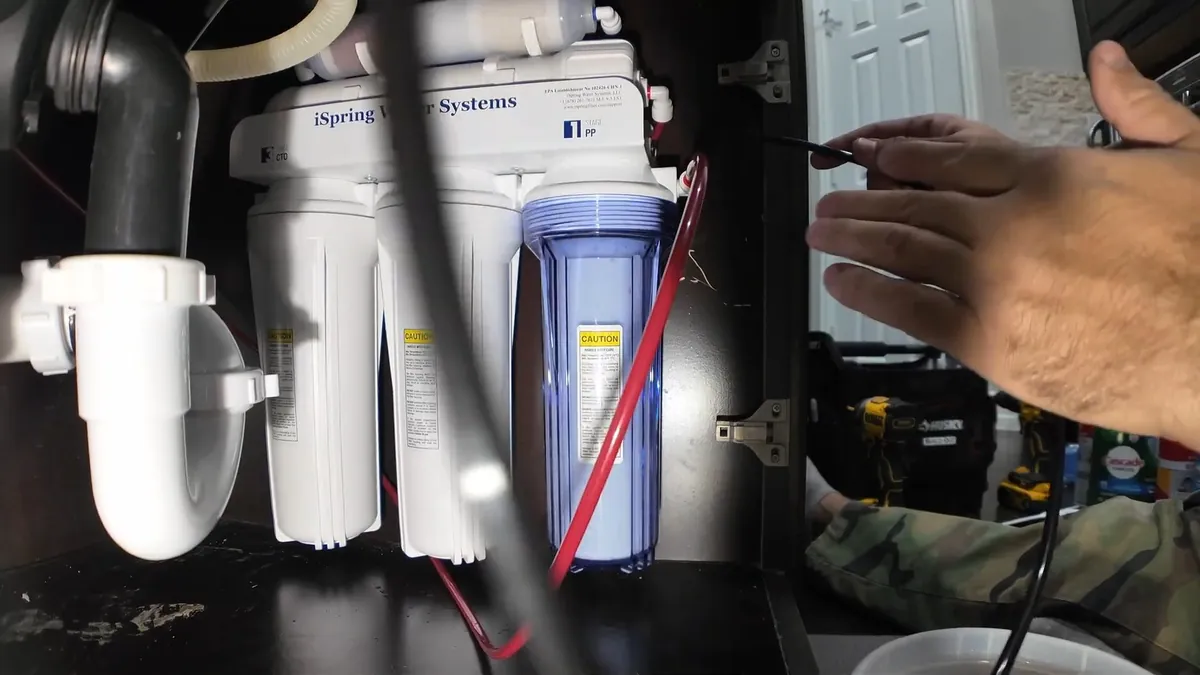
A whole-house filter treats every tap and appliance, which helps when the problem is chlorine taste, sediment or iron staining. Sediment filters catch sand and rust, carbon tanks soften taste and odor, and specialty media target specific problems. The choice follows a water test, since a filter chosen without one often solves a problem you do not have.
Whole-house units go on the main line, usually ahead of a softener so the softener resin is not clogged with sediment. Pressure drop is the main trade-off, so the plumber sizes the filter for your flow. Cartridge or media changes are the maintenance to plan for. A bypass loop and a pressure gauge on each side of the filter let you see when the cartridge is clogged, since a rising pressure difference is the usual sign, and two shutoff valves make cartridge changes clean and quick.
Not sure which equipment fits?
Describe the symptoms and the household. The plumber will suggest a test before suggesting equipment.
Water conditioning, salt use and regeneration
Regeneration normally runs at night, using salt and a few dozen gallons of water. Keep the brine tank at least a quarter full and use salt rated for softeners. If the water tastes salty after a cycle, the unit may be stuck mid-regeneration or the brine draw is too high, and a plumber should adjust it. Households on a sodium-restricted diet can ask about potassium chloride instead. A softener also sends its rinse water to a drain, so the drain line needs an air gap or a proper standpipe, and the plumber checks that before the first cycle. Salt is added every few weeks, and the tank is easier to fill when the level is low and the salt is dry, so check it at the same time each month.
Safety: a salt tank is not a place for the hands. Keep the lid on, and never mix cleaning chemicals in or near a brine tank. Anyone on a medically restricted sodium diet should ask a doctor before drinking softened water.
Water softener and filter questions answered
How do I know if my water softener needs repair?
The symptom to look for is hard water returning: scale on fixtures, spotted dishes or soap that will not lather. Causes run from an empty salt tank to a bridged crust, a clogged injector or worn resin. A hardness test at the tap after the unit shows whether the softener is working, and a plumber can test the brine draw and the drain line.
Should I choose a water softener or a filtration system?
Two different jobs. Choose a softener when scale, spotting and soap performance are the problem. Choose a filter when taste, odor, sediment or specific contaminants are. Many homes use both, with a softener on the main line and a drinking-water filter at the kitchen sink. A water test settles the choice.
Does a softener affect the water line to my refrigerator?
It softens the water to the fridge along with the rest of the house, which reduces scale in the ice maker valve. The line itself is a small tube fed from a saddle valve or a shutoff, and a worn valve is the usual leak point. Replace a weeping saddle valve with a proper shutoff when the plumber is already working on the softener.
Who can retrieve an object that fell into a softener brine tank?
A plumber can, and it is better not to reach in. Most softeners use a salt tank with a brine well that holds a float and a salt grid. Switch the unit to bypass, remove the lid and salt and fish the object out with a tool. Check the float and the brine draw afterward, since a stuck float causes overflow.
What should I check before buying a water softener?
Check the hardness, household size, available floor space, drain access and the power outlet. Then confirm the capacity, the regeneration settings and who will service the unit. Be cautious of any quote given before your water has been tested. Equipment sized from a measurement works better than equipment sized from a guess.
Softer water, cleaner fixtures, equipment sized to your tap
Call dispatch with your hardness reading and household size. The plumber can recommend a softener, a filter or both.
- Licensed and insured plumbers
- Same-day service when available
- 24/7 emergency dispatch