
24/7 Emergency Line Open
Sewer lines and laterals
Emergency Sewer Line Repair for Cheltenham Homeowners
Wastewater rising in the basement floor drain, a sewage smell near the foundation, or a main line that clogs every few months does not mean the same clog is back. It usually means the pipe itself is failing somewhere between the house and the street.
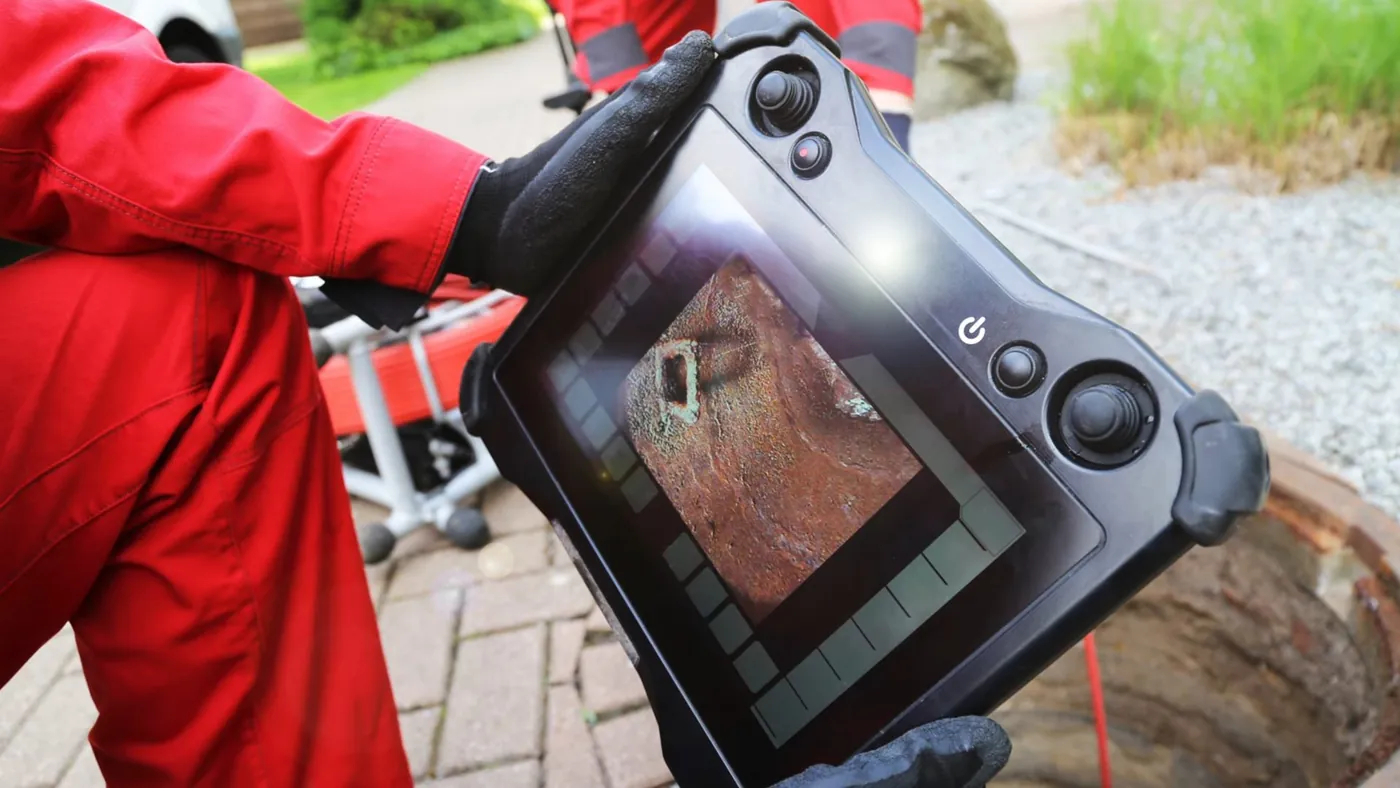
The plumber sends a camera down the line, shows you the footage, and sorts the repair into what is the property owner's job and what belongs to the utility.
- Licensed and insured plumbers
- Same-day service when available
- 24/7 emergency dispatch
Sewer backup: what to do in the first hour
A backup is the moment the stoppage stops being a drain problem and becomes a sewer one. Work through these steps while you wait for the plumber, and share what you saw when you call.
- Stop all water use: no flushing, no laundry, no dishwasher, no showers.
- Send family and pets to a dry room, and avoid touching floodwater with bare skin.
- Switch off power to a flooded basement only if the breaker is reachable from dry ground.
- Note which fixtures are backing up and whether the floor drain is the lowest one affected.
- Do not pour chemical cleaner into the line. It will sit in the pipe and endanger the plumber.
If the problem started after heavy rain, tell the plumber, because stormwater entering an overloaded sewer is a different cause than a failed pipe. The leftover mess after the line is cleared is covered on the page about water damage cleanup.
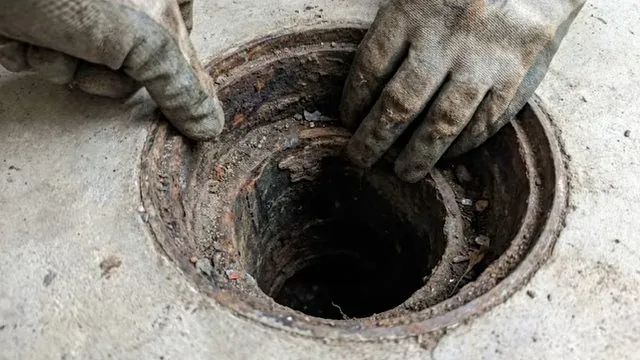
Safety: sewage carries bacteria. Send children and pets to another room, wear waterproof gloves if you must handle wet items, wash your hands afterward and do not run a vacuum or fan over wet waste.
Camera inspection: seeing the line before deciding
A sewer camera is a waterproof lens on a flexible rod that travels through the cleanout toward the street. It shows cracks, offset joints, root intrusion, sags that hold water, and the pipe material. A locator at the camera head lets the plumber mark the exact position and depth on the ground above.
Insist on the footage. A repair quote without a camera look is a guess, and a quote with footage can be checked by a second plumber. Ask for a copy of the recording and a note of how far from the cleanout each defect sits.
| What the camera shows | What it usually means | Likely next step |
|---|---|---|
| Hair-like roots in a joint | A joint has opened and roots found moisture | Cut the roots, then decide between lining and replacing that section |
| A low spot holding water | A sag in the pipe | Replace that section so waste can flow |
| Cracked or collapsed pipe | Structural failure of the line | Replace by trenchless method or excavation |
| Clean pipe with only a plug | A clog, not a damaged line | Clear and re-check at the next backup |
Camera shows damage and you need answers?
Ask dispatch for a plumber who will review the footage with you and explain each repair choice in plain terms.
Sewer cleaning and rooter service
Rooter service means cutting roots out of the line with a rotating blade on a cable. It restores flow quickly and is the usual first step when roots are the cause. It is also temporary: roots that entered through a joint will grow back until the joint is repaired. How fast depends on the joint, the tree and the soil moisture around the pipe.
Treat repeated rooting as a signal. If you have paid for the same job twice in a year, ask for a camera look and a quote to fix the joint rather than another cleaning. A plumber who clears roots should also tell you how far from the cleanout they were cut and whether the blade met more than one entry point. Routine stoppages inside the house are covered on the page about drain cleaning and clogs.
Sewer repair or sewer replacement?
Repair is the right call when the damage is limited: one cracked joint, a short offset, a single root intrusion point. The plumber exposes or lines that section and leaves the rest of the pipe alone. Replacement fits when the line has several defects, a long sag, or pipe material that is failing along its length.
Older homes often have cast iron, clay or fiber-based pipe such as Orangeburg, and each wears out differently. Clay cracks at joints, cast iron scales and rusts, and Orangeburg softens and deforms. The camera footage tells you which one you are dealing with. Replacement also covers installing a new sewer line where the old one has to be abandoned, and that work follows the township permit rule described below.
Repair a section
Fewer days, a smaller opening and a lower chance of disturbing landscaping. It fits an isolated defect in otherwise sound pipe.
Replace the line
Removes the aging pipe entirely and ends repeat visits for the same defects. It fits a line with several faults or an unusable material.
Trenchless lining and pipe bursting
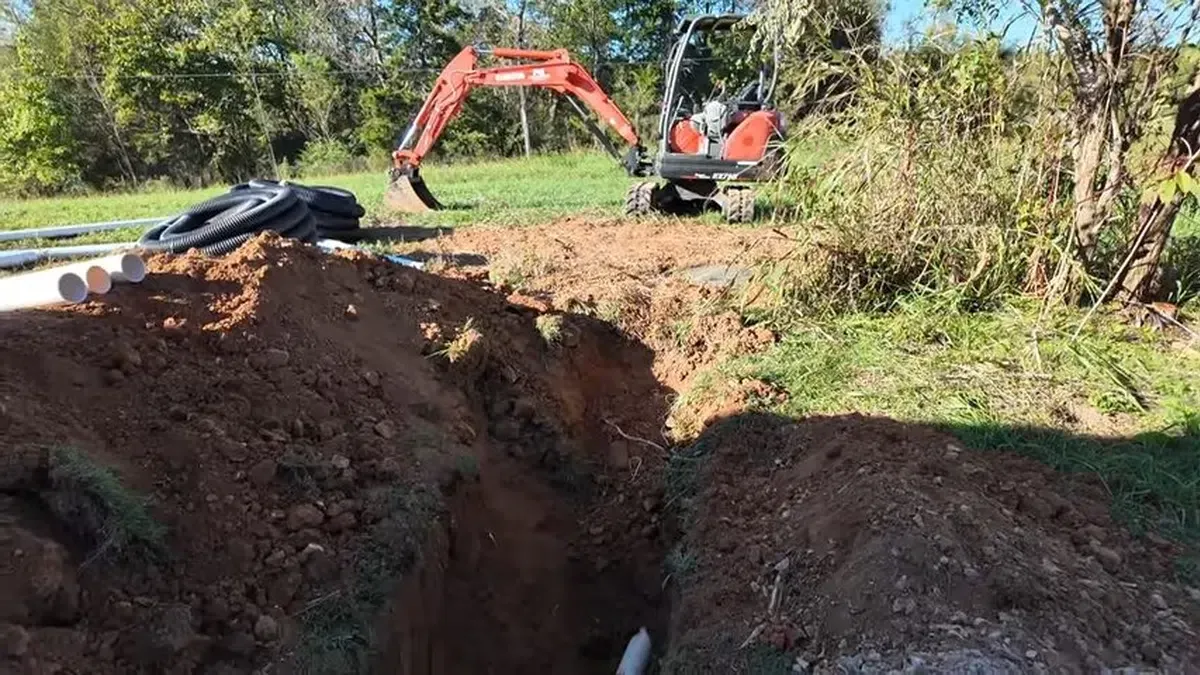
Trenchless methods fix a sewer without digging the whole yard. Lining inserts a resin-saturated sleeve into the old pipe and cures it into a new inner pipe. Pipe bursting pulls a new pipe through the old one, breaking the old line apart as it goes.
Both work from small access pits. Lining suits a line that is structurally sound enough to carry the sleeve. Bursting suits a line that has failed, as long as the route is straight and the old pipe is not under a structure that would be disturbed. Ask which method the footage supports, and what restoration of the yard is included. Also ask how the new inner pipe will be connected at the cleanout and at the main, because a sleeve that leaks at its ends has only moved the problem.
Lateral responsibility: homeowner or utility?
The lateral is the pipe that carries wastewater from your building to the sewer main in the street. Under the township code, the owner of a lateral is the title holder of the property it runs through, so repairs on that pipe are normally the owner's responsibility.
The main in the street is different. Cheltenham sold its sanitary sewer collection system to Aqua Pennsylvania Wastewater in 2019, a system of about 10,500 connections, and the state environmental agency has required corrective action plans since 2006 to reduce clear water entering the sewer. Much of the system's pipe was reported in 2019 to be more than 100 years old, made of clay or brick.
| Part of the system | Who normally handles it | What to do |
|---|---|---|
| Pipes and fixtures inside the house | The homeowner | Call a plumber |
| The lateral from the house to the main | The property owner | Call a plumber, and expect a permit for repair or replacement |
| The sewer main under the street | The sewer utility | Report the problem to the utility named on your bill |
Rules the township code sets for laterals
The township may inspect laterals by video after mailing the owner written notice at least 15 days ahead. A contractor repairing or replacing a building sewer must obtain a plumbing permit before starting. If roots block a lateral, the owner must have it cleaned by a private contractor within 30 calendar days of the notice.
Source: township sewer chapter (238); utility history: WLVT, 2019, regional Act 537 planning document. Checked November 2026.
Not sure whose pipe is failing?
Call dispatch with your bill and what you see. A plumber can tell you whether the problem is on your side of the property line.
Cleanouts, odors and old pipe
A cleanout is the capped access pipe, often near the foundation or in the basement, where a camera or cable enters. Knowing where yours is saves time on the first visit, and a cap that is missing or cracked can let rainwater into the system. A sewage smell outside near that cap points to the line, while a smell inside usually comes from a dry trap, so run water in unused drains before assuming a pipe has failed.
Old pipe shows its age in predictable ways. Clay and cast iron laterals from the early twentieth century develop offset joints and scale, and roots find those openings first. Slow drains that recur every few months, gurgling when a washer empties and a damp spot over the line in the yard all point toward the pipe rather than a single fixture. Write down when each symptom appears, since a pattern helps the plumber decide where to put the camera first.
Sewer line questions answered
Is a sewer camera inspection worth it in Cheltenham?
Yes, particularly in an older house. The township can inspect laterals by video after sending the owner written notice at least 15 days ahead, so knowing the condition of your own line first lets you act on your own timing. For a buyer or an owner with repeated backups, the footage turns a guess into a plan.
How do I check whether I have a sewer line leak?
First, run no water for an hour and check whether the area near the foundation stays wet. Second, look for a sunken or lush strip of lawn along the line toward the street. Third, ask a plumber for a camera look and a locate. One caution: a wet yard can be groundwater, so the footage matters more than the symptom.
What does a sewer camera and locate visit involve?
Picture a house where the basement drain gurgles every spring. The plumber opens the cleanout, feeds the camera through, and watches the pipe on a monitor. Where something looks wrong, the head transmits a signal that is traced above ground and marked. You get the footage and a plain description of what was found and how far down the line it sits.
What causes a sewer backup and what should I do now?
Do now: stop using water and keep the area clear. Common causes are roots, a collapsed or sagging pipe, grease and paper buildup, and sometimes stormwater overloading the system. What can wait: deciding between repair and replacement, which needs a camera look first. The backup itself cannot wait, because every flush adds to it.
Should I choose trenchless repair or digging up the line?
Think about what you see: a stoppage that returns, a smell, a sinking spot in the yard. Trenchless lining suits a line that is cracked but intact, and it avoids digging the whole yard. Excavation suits a collapsed or deeply sagging line that cannot hold a liner. Waiting makes the pipe worse, and the choice narrows as the damage grows.
Why does my main sewer line keep backing up?
Two options explain most repeats. One is a recurring blockage from roots or grease that a cable cuts but does not remove. The other is a damaged pipe that traps waste at the same low spot. Cleaning fixes the first only for a while. A camera look shows which one you have, and that decides whether you need a repair or a replacement.
A failing sewer line gets worse with every flush
Call dispatch, describe the backup or the smell, and ask for a camera inspection so the repair is based on what the pipe actually looks like.
- Licensed and insured plumbers
- Same-day service when available
- 24/7 emergency dispatch