
24/7 Emergency Line Open
Drain cleaning in Cheltenham Township
Clogged Drains Cleared in Cheltenham: Snaking and Hydro Jetting
The sink that drains a little slower every week, the tub that gurgles when the washer empties, and the toilet that needs three plunges: each one is a clog building in the same pipe, and each one ends at a stoppage you cannot ignore.
A plumber clears the blockage, then looks inside the line so you learn whether it was a one-time clog or a pipe that keeps catching.
- Licensed and insured plumbers
- Same-day service when available
- 24/7 emergency dispatch
Slow drain or full stoppage: what the symptom tells you
Where the water backs up says where the clog sits. One slow fixture points to its own branch. Several fixtures on the same floor point to the main drain below them. A backup in the lowest drain of the house after the washer runs points to the main line leaving the building.
Use the table to match what you see to the likely location before you call, and tell the plumber the answer. It saves a first visit spent just locating the problem.
| What you see | Where the clog likely sits | What helps first |
|---|---|---|
| One sink or tub drains slowly | The fixture trap or its short branch | Remove the stopper and clear visible hair or grease |
| Toilet and tub on one floor both back up | The shared branch line | Stop running water and call before the branch overflows |
| Floor drain bubbles or fills when the washer drains | The main line leaving the house | Do not run water; the line needs cabling or jetting |
| Gurgle in a drain after flushing upstairs | A partial blockage or a vent problem | Note which fixtures gurgle and when |
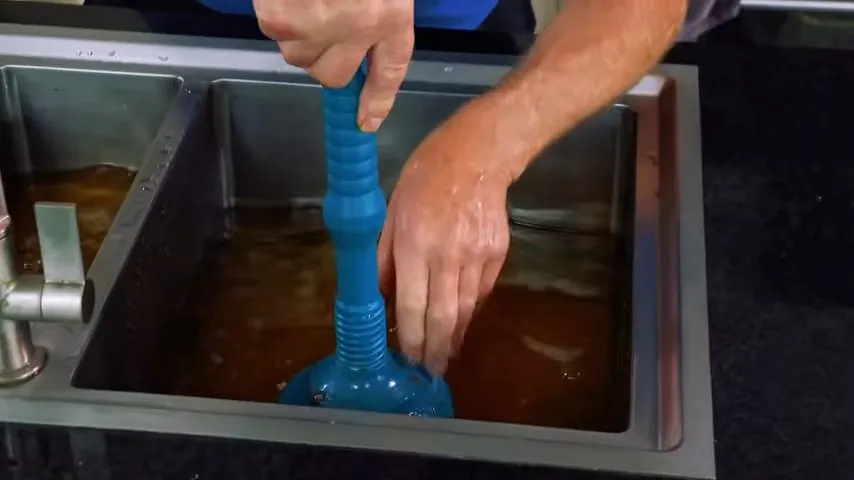
Safety: avoid pouring chemical drain cleaners into a line that is standing full, since the liquid can splash back and injure skin and eyes, and it can damage pipe. Never mix products.
Drain cleaning: kitchen, toilet and tub clogs
Most drain calls start in the same three places, and each fails for its own reason.
Kitchen sink drain
Grease cools in the trap and the pipe beyond it, then catches food scraps until the line narrows to a trickle. A plunger or a drain cleaner often moves the problem a few feet instead of clearing it. A cable removes the plug, and a camera look shows how much coating is left on the pipe walls.
Toilet clogs
A toilet that clogs once is usually a flushing problem. A toilet that clogs repeatedly points past the bowl, to a partial blockage in the closet bend or the branch beyond it. Wipes and paper towels are the common culprits, and they hold together long enough to form a mat deep in the drain.
Bathtub and shower drains
Hair and soap form a felt-like mass just below the strainer. Pulling it out by hand fixes most slow tubs, but when the standing water persists after that, the obstruction lies further down and needs a cable.
Snaking, rooter and auger work
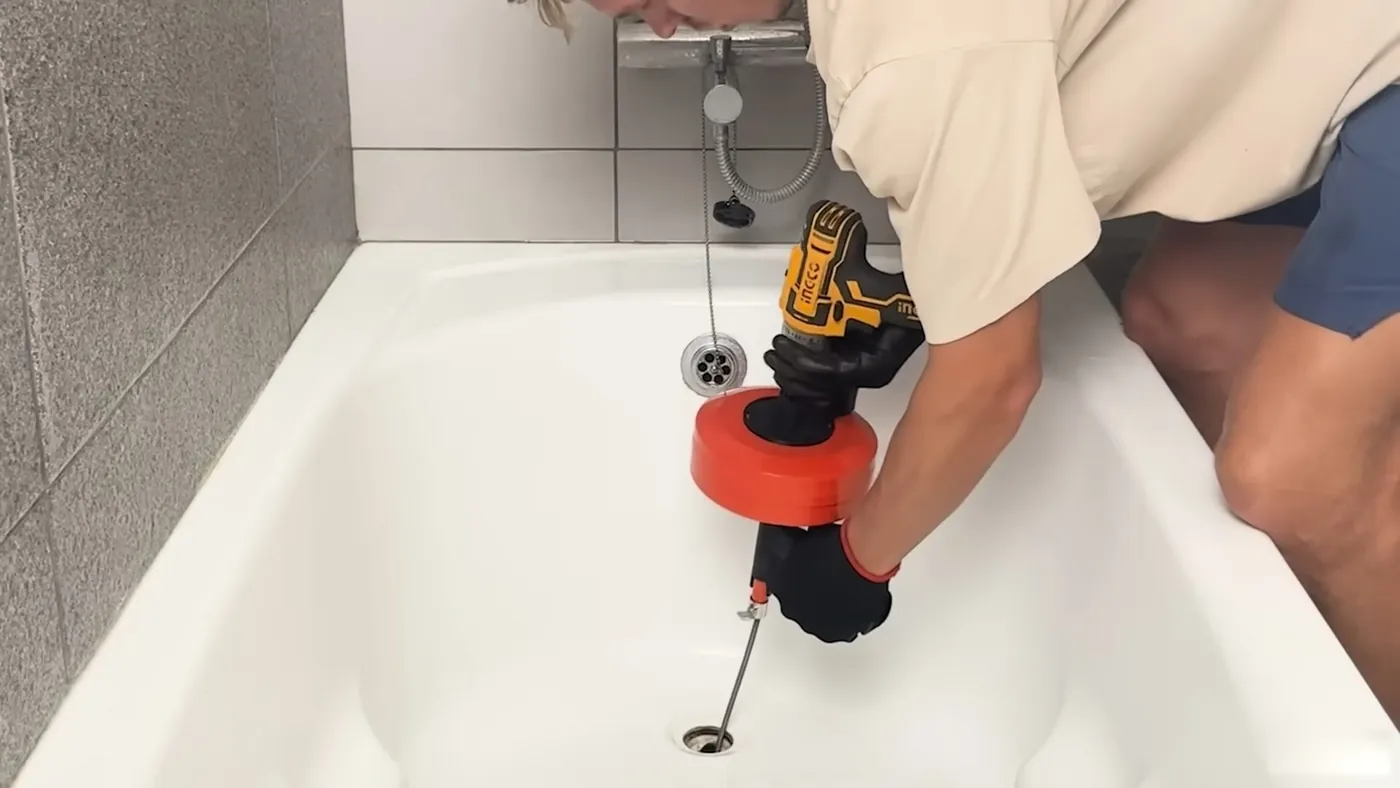
A drain cable, also called a snake or auger, is a flexible steel line with a cutting head. The plumber feeds it into the pipe until it meets the blockage, then rotates it to break the material apart or hook it for removal. Smaller hand augers handle sinks and tubs, and larger machines run through the main drain.
Cabling suits a soft blockage such as hair, paper or a grease plug. It does not remove the film left on the pipe wall, so a line cabled repeatedly will keep refilling. Ask what size cutting head will be used, whether the plumber will run a camera afterward, and what the visit found in the line when it was open. Kitchen and bath branches take smaller heads than a main drain, and the wrong size either misses the blockage or skips over it.
Drain backing up into the house?
Call and tell dispatch which fixtures are affected, so the plumber arrives with the right cable or jetting equipment.
Hydro jetting: when snaking is not enough
Hydro jetting uses high-pressure water from a nozzle that travels through the pipe, scouring the walls clean rather than boring a hole through the blockage. It is the answer for grease buildup, scale and the mat of roots that a cable cuts through but does not remove.
Jetting is not for every pipe. Hydrojetting is the same method under a single-word name, and the pressure setting is matched to the pipe. A fragile or cracked line can be damaged by pressure, which is why a camera inspection comes first when the pipe is old or the history is unknown. Expect the plumber to look before jetting, and to say plainly if the line should be repaired instead.
- A cable pass proves what is blocking the line and where.
- The camera shows the pipe wall condition, joints and any offsets.
- The nozzle runs from the cleanout toward the sewer connection, then is pulled back slowly.
- A second camera pass confirms the line is clean and shows what is left to repair.
Main line stoppages and the township notice rule
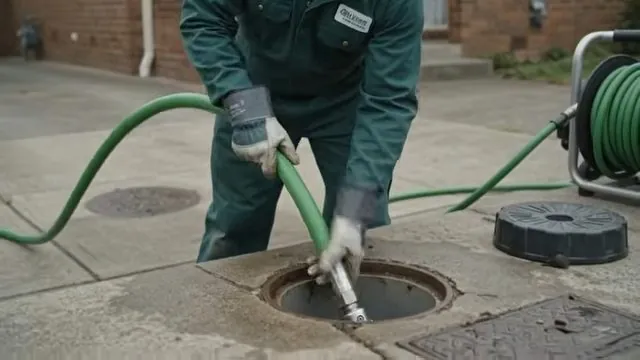
A main line stoppage affects the whole house, and it is the one drain problem that can send wastewater back through a floor drain or tub. If more than one fixture is backing up, stop running water and call.
A rule that affects main-line clearing in Cheltenham
Under the township sewer chapter, a contractor who clears a building sewer by any method must notify the Township within 48 hours after starting. If the Township finds a lateral blocked by roots, the owner has 30 calendar days from the notice to have it cleaned by a private contractor, working from inside the building toward the sewer connection.
Source: Sewers chapter of the township code, read November 2026
Ask the plumber who files the notice and how you will get a copy. If the stoppage keeps returning after cleaning, the page on sewer line repair and replacement covers what comes next.
Same drain clogging again?
Ask dispatch for a visit that ends with a camera look, so the next call is not another cabling of the same pipe.
Cast iron and failing drain pipe
Older cast iron drain pipe rusts from the inside, building rough scale that catches paper and grease. Eventually the pipe thins, cracks at joints or sags enough to hold water in a belly. Cleaning clears the symptom but cannot fix a pipe that has lost its shape.
A camera inspection shows whether you are dealing with surface scale, which a cleaning can address, or with cracks and offsets, which need a repair section. When only a short length is damaged, replacing that section in modern pipe is a sensible choice. When the whole stack has deteriorated, the plumber should show you the footage and explain why.
Roots that enter a joint, a floor drain that smells, and the kitchen exhaust or grease lines of a restaurant are cleared with the same cable, jetting and camera sequence. A commercial grease trap is the exception, since it is emptied on its own schedule. Odors that persist after a cleaning deserve a second look: a dry trap, a cracked vent or a belly that holds sewage can each leave a smell that a cable does not remove, and the camera shows which one it is.
Sump pumps, yard drains and basement drainage
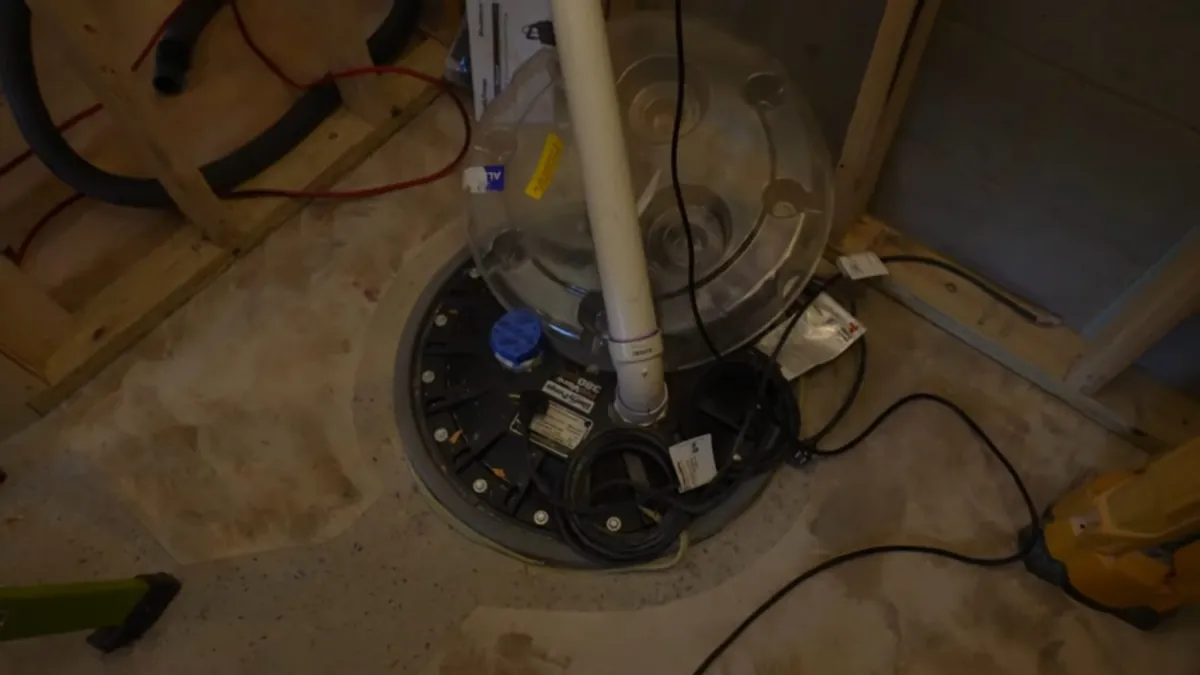
A sump pump removes groundwater from a pit so it does not rise through a basement floor, and it fails at the worst moments: during a storm, when the power may also be out. Check that the pump lifts water when you lift the float, that its discharge pipe runs away from the house, and that nothing blocks the outlet.
In Cheltenham the discharge has rules. Chapter 211 requires a plumbing permit to install or alter sump pump plumbing, and a registered plumber who installs non-conforming work loses registration in the township for two years. The sewer chapter separately prohibits connecting roof runoff, cellar drainage, French drains or sump discharge to the sanitary sewer lateral, and an owner who gets a township notice must correct the connection within 60 days.
Drainage system installation, such as a new yard drain or French drain, belongs in the same conversation: they move groundwater away, and clog with silt rather than grease. A plumber can camera and flush them, but the grade and the discharge point decide whether they work. A basement bathroom or laundry below the sewer main may drain to a sewage ejector pump rather than by gravity. Installing or replacing one is part of this same discharge conversation, with the same permit questions, and its pit and check valve are worth testing before the rainy season.
References: Chapter 211, Sump Pump and Groundwater Standards and the sewer chapter (238), read November 2026.
When a clog is backing up into the house
A stoppage that is pushing wastewater into a tub or onto a floor is the kind to call about at once. Stop running water, keep children and pets away from the area and do not pour chemical cleaner into a line that is already backing up, because it can splash back and burn skin. The plumber needs the line open and the liquid to be as plain as possible.
Before the visit, find the main cleanout if you can and clear a path to it, since a cable or camera enters there. Note which fixtures are affected: if only one backs up, the clog is probably in its own branch, while a basement floor drain that fills when upstairs fixtures run points to the main line. Shut off a washing machine and dishwasher, hold off on flushing and mop standing water with towels so the plumber can see where it is coming from.
Drain cleaning questions answered
When is jetting needed instead of snaking?
Check these in order. First, ask whether the clog came back within a few months of a cabling. Second, ask whether the camera showed grease or scale coating the pipe wall. Third, confirm the pipe can take pressure. If the first two answers are yes and the third is also yes, jetting is the better choice. One caution: a cracked line should be repaired before it is jetted.
Why is my hot water weak at one faucet when the heater seems fine?
Take a bathroom sink where hot water barely runs but cold is strong. The usual cause is a clogged aerator, a partly closed valve or mineral buildup in that fixture, not the water heater. If hot water is weak at every faucet at once, the heater or the supply to it is the likelier problem, and that is a different repair.
What should I do about a slow bathroom sink drain?
Do now: lift the stopper and remove visible hair, then flush with hot tap water. Can wait: if the drain still runs slowly after that, the clog is deeper and a cable is the next step, so book a visit within the next few days. Do not wait if other fixtures slow down at the same time, because that points to the main line.
Can a clogged drain line be fixed without digging?
Usually yes. A clog shows up as slow drains and gurgling, and the causes are grease, paper, roots or a collapsed section. Cabling or jetting clears most blockages from an indoor access point or cleanout without any excavation. A collapsed or offset pipe is the exception, and the camera footage will show whether the line must be opened.
How long does it take to clear a drain, and can I just use a chemical cleaner instead?
Option one is a cable or jetting visit. A simple clog can be cleared in the visit, while a main line with a camera look takes longer. Option two is a chemical cleaner, which suits a soft clog in a clear drain but can sit in standing water and damage old pipe. Choose the plumber when the water does not move at all.
Who is responsible for a leak in a drain line?
A leaking drain pipe inside your house is yours to repair. A leak between the house and the public sewer main sits on the lateral, which the township code assigns to the owner of the property it runs through. Take photos, shut off the fixtures that feed the line, and ask the plumber whether the leak needs a permit before the repair.
Clear the clog before it spreads to the next drain
Call dispatch, name the fixtures that are slow or backing up, and ask for cabling or jetting based on what is blocking the line.
- Licensed and insured plumbers
- Same-day service when available
- 24/7 emergency dispatch