
24/7 Emergency Line Open
Leaks under concrete floors
Emergency Slab Leak Detection and Repair in Cheltenham
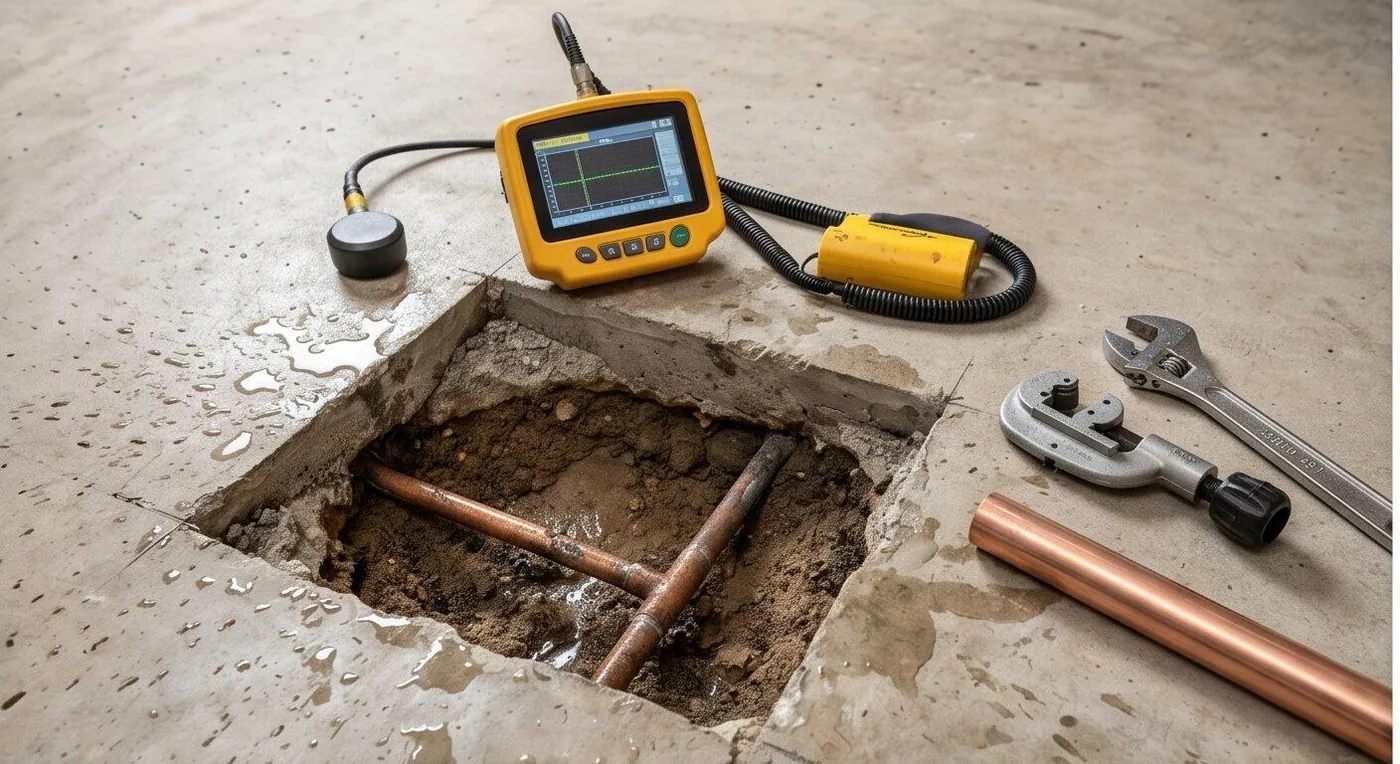
A patch of floor that feels warm underfoot, carpet that stays damp for no reason, or water pressure that fades while the meter keeps turning: these are the usual first signs of a leak in a line that runs under the concrete.
Before anyone talks about breaking a floor, the plumber confirms the house has a slab, proves the leak is there and marks it to within a few feet.
- Licensed and insured plumbers
- Same-day service when available
- 24/7 emergency dispatch
Confirm what is under your floor before assuming a slab leak
Housing in Cheltenham Township runs from historic stone houses to mid-century capes and ranches to newer condominium buildings, and those styles are not built on the same kind of foundation. A leak in a basement house is a very different job from a leak in a house poured on a slab.
Check before you book anything. If there is a basement or a crawlspace, the supply pipes usually run exposed in the ceiling or along the walls, and the plumber can reach them without cutting concrete. If the first floor sits directly on the ground, with no space beneath it, a slab is likely and the rest of this page applies.
Housing styles: EveryHome, Cheltenham Township and Location, Inc. housing-age data. No public source reports the township's foundation mix, so confirm your own house.
Signs of a slab leak you can check today
The signs are physical and easy to confirm. None of them proves a slab leak alone, but two or three together make it likely.
- A warm or hot patch on a floor that should be cool, which points to a leaking hot-water line.
- The sound of running water when every fixture is off, loudest near the floor.
- Carpet, laminate or wood flooring that lifts, stains or stays damp.
- A water bill that rose over several weeks without a change in how the house is used.
- Low pressure at fixtures, or a water meter that keeps moving after the main is open and everything else is shut.
If water is pooling on the floor right now: close the main shutoff, switch off power to wet outlets only if you can reach the breaker dry, and call dispatch. Do not walk through standing water near the panel.
Warm floor and a spinning meter?
Dispatch can send a plumber who tests the line before touching the concrete. Call with the signs you noticed.
Detection and location: proving the leak before cutting
Slab leak detection works by narrowing the problem in stages. The plumber pressure-tests the supply system to prove it is losing water, then isolates the hot and cold lines to find which one is failing. Electronic listening equipment pinpoints where the sound is strongest, and the position is marked on the floor.
The marking matters because the cut is the expensive and disruptive part of the job. A location that is off by a couple of feet means a wider opening, so ask how the plumber confirms the spot, and ask for the leak to be marked before any work is approved.
| Test | What it shows | Why it matters |
|---|---|---|
| Static pressure test | Whether the closed system holds pressure | Separates a true leak from a fixture problem |
| Hot and cold line isolation | Which line is losing water | Limits the search to one pipe run |
| Electronic listening | Where the leak noise is loudest | Puts a mark within a few feet of the break |
| Moisture or thermal check | Damp or warm zones under finishes | Confirms the mark before any cutting |
Repair options: tunnel, reroute, epoxy or lining
There are four ways to deal with a leaking line under concrete, and the right one depends on how many leaks the pipe has had, where it runs and how the house is finished. A plumber who offers only one is probably selling the job, not weighing the house.
Spot repair through the slab
The floor is opened directly over the leak, the pipe is fixed and the concrete patched. It suits one isolated leak in sound pipe with clear access from above.
Tunneling underneath
A tunnel is dug from outside to reach the pipe without cutting finished floors. It saves interior flooring but needs workable soil and open ground nearby.
Overhead reroute
The failing line is abandoned and new pipe is run through the attic, ceiling or walls. It fits when the pipe has leaked more than once.
Epoxy or lining
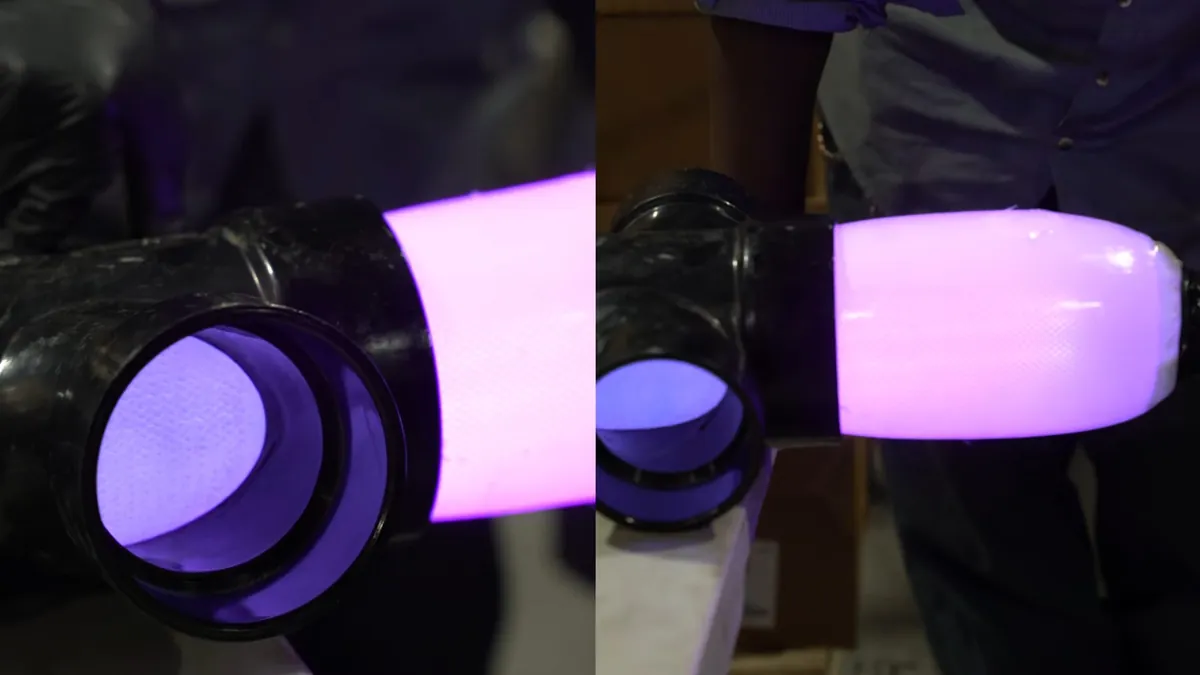
A coating is applied inside the old pipe to seal pinholes. It suits some pipe conditions and is a poor fit for badly corroded runs.
When two leaks have appeared on the same system, compare the reroute against replacing more of the system, which the page on whole-house repiping explains. If you are still hunting for the source, the page on general leak detection covers the wall, ceiling and meter tests.
Leak marked and a repair choice to make?
Ask the plumber for the options in writing, with what each one disturbs in your house, before you approve anything.
What a leak does to the concrete and foundation
A pressurized leak under a slab does not stay put. Water erodes the soil that supports the concrete, and over a long enough time that can lead to settling, cracking and moisture that rises into flooring. The damage depends on how long the leak ran and what the soil is like beneath the house.
This is why a plumber, not a flooring company, should look first. If the slab already shows cracks or the floor has dropped in one corner, tell the plumber when you call, and consider asking a structural professional to look at it once the leak is stopped. Fixing the pipe is the plumbing job; judging the structure is another one. A plumber can describe what the leak did to the ground around the pipe once the area is opened, and that observation is worth passing to whoever evaluates the floor.
Insurance paperwork after a slab leak
If you plan to file a claim, keep the plumber's written findings: where the leak was, how it was confirmed and what caused it. Photograph the marked floor and any damaged finishes before repairs begin. The plumber's report is evidence, and the claim decision itself belongs to you and your carrier. A broader water damage cleanup may also be needed once the line is fixed.
Policies differ on whether the cost of reaching a hidden leak is covered, and many exclude the pipe itself while covering resulting damage. Read your policy or call your agent before work begins, ask what documentation is required and keep receipts for drying, flooring and any temporary housing. Do not delay stopping the leak while a claim is reviewed, since continued damage can be treated as avoidable.
Slab leak questions answered
When should I call a plumber about a possible slab leak?
Call as soon as a warm floor spot, a sound of running water or an unexplained bill appears together with a moving water meter. A slab leak does not stop on its own, and the longer it runs, the more soil it washes from under the concrete. Meanwhile, close the main shutoff overnight if the floor is getting wet.
Is it better to repair a slab leak in place or reroute the pipe?
Repair in place when one leak has appeared in pipe that is otherwise sound and you can get at it from above. Reroute the line when the pipe has leaked before, since the next leak is probably close behind. Rerouting costs more up front, but it avoids opening the floor again. The plumber should show you the condition of the pipe before you choose.
What does tunneling, rerouting or epoxy lining actually involve?
Tunneling digs under the house from outside to reach the pipe, rerouting runs new pipe overhead and abandons the old line, and epoxy lining coats the inside of the existing pipe. Each one disturbs a different part of the house. Ask which finishes, floors or yard areas the plan will touch, and what is restored afterward.
What causes a slab leak?
Pipes under a slab can fail from corrosion, from pressure on fittings, or from movement of the concrete around them. Cheltenham has many houses built from the 1940s through the 1960s, so some supply lines have served for decades. Age raises the odds. A plumber can look at the pipe material and the leak location to judge which cause fits your house.
Do not let a hidden leak soften the ground under your floor
Describe the warm spot, the sound or the meter to dispatch, and ask for a plumber who tests the line before any concrete is cut.
- Licensed and insured plumbers
- Same-day service when available
- 24/7 emergency dispatch